
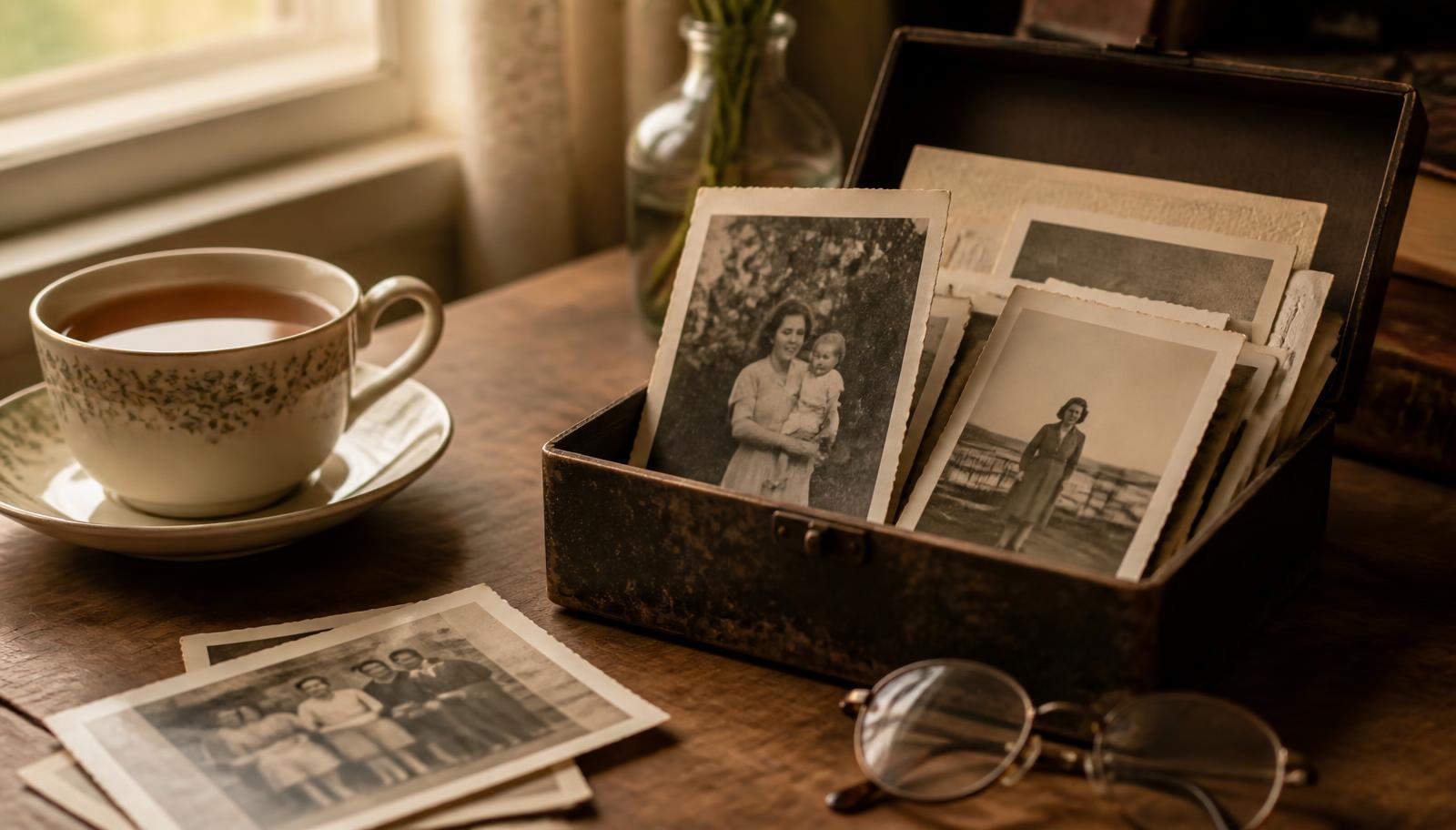
An online memorial is a place where the story of someone's life can be preserved and shared — not simply their name and dates, but the memories, photographs, milestones, stories and moments that made them who they were.
For families, creating one can feel like a big task. A lifetime contains thousands of moments, and it can be difficult to know where to begin.
The good news is that you don't need to capture everything at once.
A meaningful online memorial can be built gradually, beginning with the important details and growing as photographs are found, memories return and family members contribute their own stories.
This guide walks through the process step by step.
1. Start with the person, not the memorial
Before thinking about photographs, page layouts or what to write, think about the person whose life you want to remember.
What made them them?
It might be their family, their career, the places they lived, their humour, their passions, their achievements or simply the small things everyone remembers.
A good memorial doesn't need to document every event in someone's life. It should help another person understand something about who they were.
Start by gathering the basic details:
- full name
- important dates
- places they lived
- family relationships
- education and career
- significant achievements
- interests and passions
- important life events
These facts provide the framework. The memories and stories you add later are what bring that framework to life.
2. Gather photographs before trying to organise everything
Family photographs are often scattered across phones, computers, photo albums, drawers and the homes of different relatives.
Don't worry about arranging them perfectly at the beginning.
Start by collecting them.
Look for photographs representing different stages of life:
- childhood
- school years
- friendships
- marriage and relationships
- children and family
- work
- travel
- hobbies
- celebrations
- ordinary everyday moments
Formal portraits can be important, but don't overlook candid photographs.
A photograph of someone cooking, fishing, gardening, laughing with friends or sitting at the family table may say far more about them than a professionally posed image.
Once you've collected the photographs, you can begin choosing those that help tell the story.
3. Ask family and friends what they remember
You don't have to create a memorial entirely from your own memories.
Other people may remember completely different parts of someone's life.
Ask siblings, children, grandchildren, cousins, old friends and colleagues questions such as:
- What is the first thing you think of when you remember them?
- What always made them laugh?
- What were they really good at?
- What did they love doing?
- What story about them do you always tell?
- What did they teach you?
- What was an ordinary day with them like?
Often, the seemingly small memories become some of the most valuable.
Years from now, future generations may already know where someone worked or when they were born. What they won't necessarily know is that Grandpa made pancakes every Sunday morning, Mum sang while she cooked, or Dad could never drive past a garage sale without stopping.
Those details preserve personality.
4. Build the life story
This is often the part people find most difficult.
You may have the facts, photographs and memories but still wonder:
"How do I turn all of this into someone's life story?"
You don't need to be a professional writer.
A simple approach is to work through their life chronologically:
Early life
Where were they born? What was their childhood like? Who were their parents and siblings?
Growing up
What were their school years, friendships and early experiences like?
Adult life
What work did they do? Where did they live? Who did they meet?
Family
What relationships, children, grandchildren and family traditions became important?
Interests and experiences
What did they love doing? Where did they travel? What were they known for?
Later years
How did life change? What remained important to them?
Legacy
What did they leave behind in the people who knew them?
Don't worry if you cannot answer every question.
A life story can begin with what you know and grow as more memories are discovered.
Getting help with the writing
This is one reason we created Story Builder at Eternal Memorial.
Instead of expecting someone to sit in front of a blank page and somehow write an entire biography, Story Builder guides you through questions about the person's life.
Your answers provide the memories and facts. Story Builder then helps bring those answers together into a life story that you can review and edit.
The memories remain yours; the technology simply helps with the difficult job of turning them into a readable story.
5. Add the milestones that shaped their life
A life isn't only a continuous story. Certain moments become landmarks.
These might include:
- births
- graduations
- marriage
- children
- moving somewhere new
- career achievements
- travel
- sporting achievements
- community involvement
- retirement
- important family occasions
Adding milestones creates another way for visitors to understand the journey of someone's life.
It can also trigger memories.
Seeing "Moved to Queensland — 1984", for example, may remind another family member of a story or photograph they had forgotten.
6. Preserve more than photographs
For generations, photographs were one of the few ways families could preserve someone's presence.
Today we can preserve much more.
A short video can capture someone's:
- voice
- laugh
- expressions
- mannerisms
- stories
- personality
Old family videos can be particularly precious.
There may be footage sitting on phones, computers, old cameras or converted home movies that family members rarely see.
Consider including videos that show the person as they really were rather than only formal occasions.
At Eternal Memorial, Life in Motion allows video memories to sit alongside the person's story and photographs, helping future generations not only read about someone, but see and hear them too.
7. Let other people contribute
No two people remember someone in exactly the same way.
A daughter may remember something completely different from a childhood friend. A grandchild may treasure a tradition that other family members barely noticed.
That is why an online memorial can become richer when other people are involved.
Family and friends can contribute memories and messages through Tributes, creating additional perspectives around the person's story.
There is also an important distinction between contributing a memory and helping look after the story itself.
Eternal Memorial uses Story Guardians for people trusted to help with the ongoing stewardship of a story.
This becomes particularly important when thinking beyond today.
A memorial should not depend entirely on one person remembering passwords, maintaining files or being available forever.
8. Publish and share the memorial
Once you're comfortable with what you've created, the memorial can be published and shared.
But publishing doesn't mean the story has to be finished forever.
Families continue discovering photographs.
Someone remembers another story.
An old friend gets in touch.
A video turns up on an old phone.
A meaningful memorial should be able to continue growing as those things happen.
With Eternal Memorial, a published story can still be managed and updated, allowing new memories to become part of the story over time.
Sharing also doesn't have to mean repeatedly searching for the memorial.
A direct link can give family and friends a simple way to return, while a QR code can create a connection between the physical and digital memorial.
For example, families may choose to keep a QR code with photographs, family records or other meaningful places so future generations can find the story.
9. Think about who will look after the story in the future
This is one of the most overlooked parts of creating an online memorial.
Most people naturally focus on:
"How do I create it?"
A longer-term question is:
"Who looks after it later?"
Digital memories can easily disappear when they depend on one device, one account or one person.
Thinking about stewardship from the beginning can help protect against that.
Ask yourself:
- Who else in the family should know about the memorial?
- Who would I trust to help look after the story?
- Who should be able to continue it if I cannot?
- Have important photographs and videos been preserved rather than left on one device?
This is part of the thinking behind Story Guardians.
Preserving someone's story isn't only about creating something today. It is about helping ensure there is someone who can continue caring for it tomorrow.
10. Think about long-term preservation
An online memorial is different from an ordinary social media post.
Social platforms are designed around what's happening now. A memorial is being created for people today and people who may want to discover the story many years from now.
That makes long-term preservation an important consideration.
Before choosing where to create an online memorial, consider questions such as:
- What happens to the memorial over time?
- Who can continue managing it?
- Can the story be updated?
- How are photographs and videos handled?
- What happens if the original person managing it is no longer able to?
These questions may not seem urgent while creating the memorial, but they become increasingly important as the years pass.
11. Don't wait until you have everything
One of the easiest mistakes is waiting.
Waiting until all the photographs are organised.
Waiting until everyone in the family has contributed.
Waiting until you know exactly what to write.
Waiting until you have enough time.
A life story doesn't have to be completed in one sitting.
Start with what you know.
Add one photograph.
Record one memory.
Write down one story.
Ask one family member a question.
Then build from there.
The important thing is to begin preserving those memories while they are still available.
Creating an Online Memorial with Eternal Memorial
Eternal Memorial was created to bring the different parts of a person's story together in one lasting place.
Rather than creating only a memorial page containing a photograph, name and dates, you can preserve a much richer picture of someone's life through:
- Life Story — preserve the person's story rather than only the basic facts.
- Story Builder — answer guided questions and receive help bringing those memories together into a story you can review and edit.
- Photographs — build a visual record across the different stages of their life.
- Milestones — record the important moments that shaped their journey.
- Life in Motion — preserve video memories so future generations can see and hear the person.
- Tributes — allow family and friends to leave their own memories and messages.
- Story Guardians — nominate trusted people who can help with the ongoing stewardship of the story.
- Sharing — share the memorial through its link and QR code.
- Preservation — create the story with the future in mind, not simply the present.
And if the person whose story you want to preserve is still living, you don't have to wait.
A Living Legacy allows a life story to begin while someone is alive — either created by the person themselves or with the help of someone close to them.
That story can continue growing through their lifetime and, when the time eventually comes, transition into a Memorial while keeping the story that has already been preserved.
A life is more than a name and a date
The most valuable part of an online memorial isn't the technology behind it.
It's what the technology allows a family to keep.
The stories people tell.
The photographs everyone remembers.
The voice someone hasn't heard in years.
The ordinary moments that once seemed unimportant.
And the story that allows a future grandchild or great-grandchild to discover not simply when someone lived, but who they were.
That's what makes a life story worth preserving.
Every life has a story worth preserving
Create a Memorial for someone you love, or begin a Living Legacy while the story is still being written.